


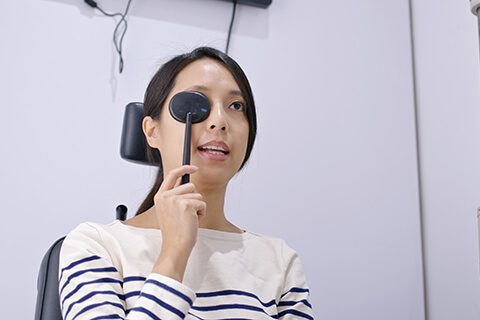
Eye Center of Hawaii is dedicated to providing preventative eye care and treatment to families across Hawaii. We offer comprehensive diagnostic, medical, and surgical services that include screening and treatment for common eye diseases, vision loss analysis, prescriptions for glasses and contact lenses, and routine eye exams.
Head surgeon and founder, Michael D. Bennett, MD, FACS, is also proud to provide state-of-the-art eye care services for cataract, retina, glaucoma, low vision, sports vision, and LASIK.
Routine Eye Exams
Why are eye exams important?
Eye exams are designed to detect more than just blurry vision. Regular visits to your eye doctor are important for early detection and treatment of eye diseases such as cataracts, glaucoma, diabetic retinopathy, and macular degeneration, all of which can cause serious vision loss or permanent blindness if left untreated. Consistent eye exams allow your doctor to monitor the health of your eyes, provide a diagnosis and treatment as needed, and prolong your vision for as long as possible.
How often should I schedule an eye exam?
Children – The American Optometric Association recommends starting with a comprehensive vision assessment at 6 months of age. Your doctor will check for signs of eye and vision problems that may hinder development such as nearsightedness, farsightedness, astigmatism, eye movement ability, and eye health problems.

Your child’s next examination should be scheduled around age 3, then again before he or she starts school. After that, the general recommendation is to schedule an exam every two years until age 18. Vision problem risk factors such as premature birth, developmental delays, family history of eye disease, or a refractive error diagnosis may require more frequent eye exams.
Adults ages 18 to 55 – Healthy adults in this age range should schedule a comprehensive eye exam at least every two years. At-risk adults should have an exam every six months to a year. “At-risk” means you are more likely to develop vision problems if you have diabetes, high blood pressure, or a family history of eye disease, take certain prescription medications, have an eye injury, or if you had an eye procedure such as cataract surgery.
Adults ages 55 and up – Annual comprehensive exams are recommended for adults in this age range, since seniors are more at risk for vision problems and sight-threatening eye diseases. Risk factors such as diabetes, high blood pressure and medical history may necessitate more frequent eye exams.
What happens during a comprehensive eye exam?
A comprehensive eye exam includes pupil dilation and a range of tests to measure visual acuity and eye muscle movement. Your eye doctor will also examine the inside of your eyes for signs of abnormalities. Special equipment is used to screen for conditions like cataracts, macular degeneration, diabetic retinopathy, and glaucoma. Your doctor will also ask questions about your medical history to identify potential risk factors for eye problems.
Eye Care Specialties
Cataract – Eye Center of Hawaii is proud to offer laser cataract surgery in Hawaii. This modern procedure is the most precise form of cataract removal available today. Computer-guided accuracy and state-of-the-art intraocular lens implants result in crystal clear vision that lasts.
Retina- A healthy retina is essential to clear vision. As we age, however, the retina is more susceptible to damage. If left untreated, retinal damage can result in permanent blindness. At Eye Center of Hawaii, we provide diagnosis and treatment for retinal conditions such as diabetic retinopathy, macular degeneration, retinal tears, and detachments.
Glaucoma – Known as the “silent thief of sight,” glaucoma is a serious eye disease that can take away your vision without warning. Symptoms of this disease often go unnoticed, as it progresses slowly over time. Eye Center of Hawaii offers glaucoma screenings, advanced laser treatment and micro-invasive glaucoma surgery (MIGS) at our eye care facilities in Hawaii.
Low Vision – A person with low vision has a significant visual impairment that can’t be corrected with glasses, contacts, medication, or eye surgery. Eye diseases are most often the cause of the impairment. At Eye Center of Hawaii, our team of low vision specialists can evaluate the degree and type of vision loss, recommend appropriate vision aids, and provide education on how to live with low vision.
Sports Vision – Athletic performance is dependent on good vision. From eye testing and analysis to personalized training and custom eyewear, Eye Center of Hawaii offers a full spectrum of sports vision services to the people of Hawaii.
LASIK – A quick and painless procedure, LASIK is the most popular form of vision correction in the world. This popular refractive surgery is an excellent option for the majority of patients who wish to reduce or eliminate their dependence on glasses and contacts. At Eye Center of Hawaii, we use the best laser technology to achieve your ideal visual outcome.
Dry Eye –



#FactFriday ☀️
With consistent sun exposure year-round, protecting your eyes is especially important. Wearing sunglasses with UV protection can help reduce long-term damage linked to cataract development and support overall eye health.
A simple step that makes a big difference 🕶️ ... See MoreSee Less
0 CommentsComment on Facebook
June is Cataract Awareness Month 👁️
Cataracts are a common age-related change that can lead to blurry vision, difficulty seeing at night, and faded colors. These changes often develop slowly but can begin to affect daily life over time.
The good news is that cataracts are treatable, and early attention can help support clearer, healthier vision. ... See MoreSee Less
0 CommentsComment on Facebook
There is no specific age for cataract surgery. Cataracts are most often related to aging, but they can develop earlier depending on a variety of factors including genetics, medical conditions, or previous eye injury.
Surgery is recommended when cataracts begin to interfere with daily life and vision starts affecting things like reading, driving especially at night, or overall clarity even with updated glasses.
If you are noticing changes in your vision, schedule with our team to learn more your treatment options. ... See MoreSee Less
0 CommentsComment on Facebook
This Memorial Day, we take a moment to honor and remember those who gave everything for our country. 🇺🇸
Grateful today and always for their sacrifice. ... See MoreSee Less
0 CommentsComment on Facebook
#FunFactFriday ... See MoreSee Less
0 CommentsComment on Facebook
A new treatment option for dry AMD is now available in Kona 🌺
This advancement gives patients access to care closer to home, offering new possibilities in managing dry age-related macular degeneration.
Talk with our team to learn more about whether this treatment may be right for you. ... See MoreSee Less
0 CommentsComment on Facebook