

Condition
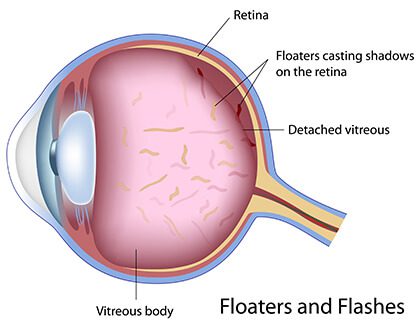
Small specks of protein and other matter get trapped during the formation of the eye before birth and remain in the eyes, leaving spots. If the vitreous (clear gel-like substance inside the eye) shrinks and pulls on the retina, flashes of light occur making spots noticeable. The pulling movement stimulates the retinal receptor cells to “fire” and causes the perception of light flashes.
Vitreous floaters are sometimes seen as threadlike strands in the patient’s visual field. Typically these lines/spots float or drift as the eye moves
Risk factors
While most people see a few spots on occasion, they can occur more frequently and become more noticeable with age.

Symptoms
Spots and floaters are the specks and threadlike strands that drift across a person’s field of vision. They appear often with flashes of light.
Treatment
Flashes and floaters are not generally a serious condition needing treatment, but they can be symptoms of vitreous or retinal detachment; both of which are serious conditions. In either of these cases, treatment from an eye doctor with lasers and/or surgical intervention may be necessary to protect vision.



Your eyes do more than help you see, they can provide important clues about your overall health. Regular eye exams let your doctor spot early signs of conditions like diabetes and high blood pressure, helping you stay ahead of potential health issues! ... See MoreSee Less
0 CommentsComment on Facebook
Struggling with dry, uncomfortable eyes? 👁️ Dry eye can make even simple tasks frustrating, but effective treatments are available to help your eyes feel healthy and comfortable again. Schedule an appointment with us to find the right solution for you! ... See MoreSee Less
0 CommentsComment on Facebook
Adults should have regular eye exams to keep their vision and eye health on track. Ages 18 to 55 should schedule exams at least every two years, more often if they have risk factors like diabetes, high blood pressure, or a family history of eye disease. Adults 55 and up should have yearly exams to monitor for age-related vision changes and eye conditions.
Schedule your eye exam with us today and take charge of your vision! ... See MoreSee Less
0 CommentsComment on Facebook
Eye exams do more than check for blurry vision. Regular visits help detect eye diseases like cataracts, glaucoma, diabetic retinopathy, and macular degeneration early before they cause serious vision loss. Staying on top of your eye health lets your doctor monitor, diagnose, and treat issues so you can protect your vision for years to come. 👁️ ... See MoreSee Less
0 CommentsComment on Facebook
Your eyes work hard every day, make sure they’re protected year-round! Visit our Kona, Kauai, and Kailua optical locations where our opticians can help you find frames and lenses that fit your lifestyle, vision needs, and budget. 🕶️ ... See MoreSee Less
0 CommentsComment on Facebook
A.
Glaucoma is often called the “silent thief of sight” because it can steal your vision slowly without you noticing. It usually starts with your peripheral vision, and by the time symptoms appear, some damage may already be done. Regular eye exams are the best way to catch it early and protect your sight for the years ahead. ... See MoreSee Less
0 CommentsComment on Facebook