


What is sports vision?

Sports vision is an eye care subspecialty dedicated to vision enhancement for children, teens and adults who wish to improve athletic performance.
Eye Center of Hawaii offers sports vision tests, training programs, and specialty eyewear designed to maximize hand-eye coordination, visual clarity, focusing speed, accuracy, depth perception, reaction time, and more.
Why see a sports vision specialist?
20/20 eyesight isn’t the only measurement of good vision. Sports vision performance tests and personalized training programs can help determine your visual strengths and find areas of opportunity.
At Eye Center of Hawaii, we help to identify your athletic goals and customize a training plan to improve your visual abilities, enhance your performance, and boost your confidence. Your sports vision specialist can also recommend appropriate eyewear and contact lenses for your chosen activity, as well as provide instruction on how to avoid eye injuries.
Sports Vision Analysis
Our sports vision specialists conduct a thorough performance analysis that measures:
Visual Acuity – Your ability to see moving objects clearly.
Eye Tracking – Your ability to use your eyes to follow an object as it moves.
Eye Focus – Your ability to quickly change focus from one object to another.
Peripheral Vision – Your ability to see out of the sides of your eyes.
Depth Perception – Your ability to quickly and accurately judge distance and speed.
Eye-Hand & Eye-Body Coordination – Your ability to use your eyes to direct the movements of your hands and body.
Who can benefit from a sports vision analysis?
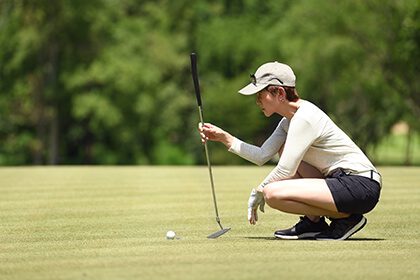
- Professional athletes
- High school and college athletes
- Recreational sportspeople
- Law enforcement personnel
- Firefighters
- Military personnel
- Pilots
Types of Sports Vision Tests
Sports vision tests differ depending on the needs of the individual.
Your sports vision specialist will consult with you to determine which of the following tests will best help you achieve your athletic goals:
Snellen Eye Chart – This is a test most patients are familiar with, as it is part of a routine eye exam. Snellen charts are used in combination with optical equipment to measure visual acuity, or how clearly you can see from varying distances. The test is especially effective at identifying nearsightedness or farsightedness in young athletes, which can commonly go undetected until an exam is performed.
Contrast Sensitivity Test – The purpose of this test is to measure your eyes’ ability to distinguish between increments of light versus dark. Contrast sensitivity is especially important in situations that require your eyes to differentiate an object from its background. Environments with low light, fog, or glare are often the most difficult for athletes with poor contrast sensitivity.
Eye Tracking Analysis – Sports vision specialists are trained to use specialized computer systems that measure how well your eyes follow moving objects. These devices may also be incorporated into a personalized training program to improve eye tracking ability.
Eye Alignment Test – In order for your eyes to work together effectively, they must be symmetrically aligned. Eye alignment tests check for strabismus, a condition in which one eye looks directly at an object while the other is misaligned inward, outward, upward, or downward. If not treated, strabismus can result in double vision, eye strain and headaches.
Depth Perception Measurement – Depth perception is the ability to see objects in three dimensions and judge how far away it is. Accurate depth perception typically requires the use of both eyes, but it is possible to improve perception skills in people who rely on one eye to see — optical aids and specialized training can help.
Sports Eyewear
From glare-resistant sunglasses and custom-tinted contact lenses to protective sports goggles and shatter-proof eyeglasses, sports eyewear is specifically designed to be secure, comfortable, and safe.
The Optical Shop in Honolulu, HI at Eye Center of Hawaii features premium sports eyewear to help children, teens and adults enhance athletic performance without sacrificing style. Visit any of our optical shops in Hawaii to view our vast collection of frames, goggles, and contact lenses for athletes.



#FactFriday ☀️
With consistent sun exposure year-round, protecting your eyes is especially important. Wearing sunglasses with UV protection can help reduce long-term damage linked to cataract development and support overall eye health.
A simple step that makes a big difference 🕶️ ... See MoreSee Less
0 CommentsComment on Facebook
June is Cataract Awareness Month 👁️
Cataracts are a common age-related change that can lead to blurry vision, difficulty seeing at night, and faded colors. These changes often develop slowly but can begin to affect daily life over time.
The good news is that cataracts are treatable, and early attention can help support clearer, healthier vision. ... See MoreSee Less
0 CommentsComment on Facebook
There is no specific age for cataract surgery. Cataracts are most often related to aging, but they can develop earlier depending on a variety of factors including genetics, medical conditions, or previous eye injury.
Surgery is recommended when cataracts begin to interfere with daily life and vision starts affecting things like reading, driving especially at night, or overall clarity even with updated glasses.
If you are noticing changes in your vision, schedule with our team to learn more your treatment options. ... See MoreSee Less
0 CommentsComment on Facebook
This Memorial Day, we take a moment to honor and remember those who gave everything for our country. 🇺🇸
Grateful today and always for their sacrifice. ... See MoreSee Less
0 CommentsComment on Facebook
#FunFactFriday ... See MoreSee Less
0 CommentsComment on Facebook
A new treatment option for dry AMD is now available in Kona 🌺
This advancement gives patients access to care closer to home, offering new possibilities in managing dry age-related macular degeneration.
Talk with our team to learn more about whether this treatment may be right for you. ... See MoreSee Less
0 CommentsComment on Facebook